If you’ve ever sat down to create content and immediately thought, “What should I post today?” you’re definitely not alone.
One of the biggest challenges new business owners face isn’t creating content—it’s consistently coming up with ideas.
At first, posting randomly might seem harmless. However, over time, random content often leads to confusion, inconsistency, and burnout.
Fortunately, there’s a much easier way to approach content creation.
That’s where content pillars come in.
Content pillars help you organize your ideas, create content more efficiently, and build a stronger connection with your audience. Even better, they make marketing your business feel much less overwhelming.
In this guide, we’ll break down exactly what content pillars are, why they matter, and how to create your own content pillars for your business.
In This Guide
✓ What content pillars are
✓ Why content pillars matter
✓ How to create your pillars
✓ Content pillar examples
✓ Common mistakes to avoid
✓ How to turn one idea into multiple pieces of content
What Are Content Pillars?
Content pillars are the main topics your business consistently creates content around.
Think of them as categories that support your overall brand and business goals.
Instead of posting about random subjects, content pillars help ensure your content stays focused and relevant.
For example, imagine a business that teaches people how to start an online business.
Their content pillars might include:
- Business Startup
- Branding
- Content Marketing
- Digital Products
- Productivity
Notice how all of these topics support the same audience.
As a result, every piece of content works together rather than competing for attention.
“Content pillars help you spend less time wondering what to post and more time creating content that actually supports your business.”
Why Content Pillars Matter
Without content pillars, it’s easy to fall into the habit of posting whatever comes to mind.
While that may work occasionally, it often creates inconsistent messaging.
As a result, your audience may struggle to understand:
- What you do
- Who you help
- Why they should follow you
On the other hand, content pillars create clarity.
They help your audience quickly recognize what your brand is about.
Additionally, content pillars make it easier to:
- Plan content
- Create blog posts
- Design Pinterest pins
- Write newsletters
- Develop products
In other words, content pillars simplify your entire content strategy.
Just Starting Your Business?
Before creating content, make sure you’ve built a strong business foundation.

How to Choose Your Content Pillars
When creating content pillars, start by asking yourself:
What topics naturally support my business?
What does my audience need help with?
What products or services do I plan to offer?
The best content pillars sit at the intersection of:
- Your expertise
- Your audience’s needs
- Your business goals
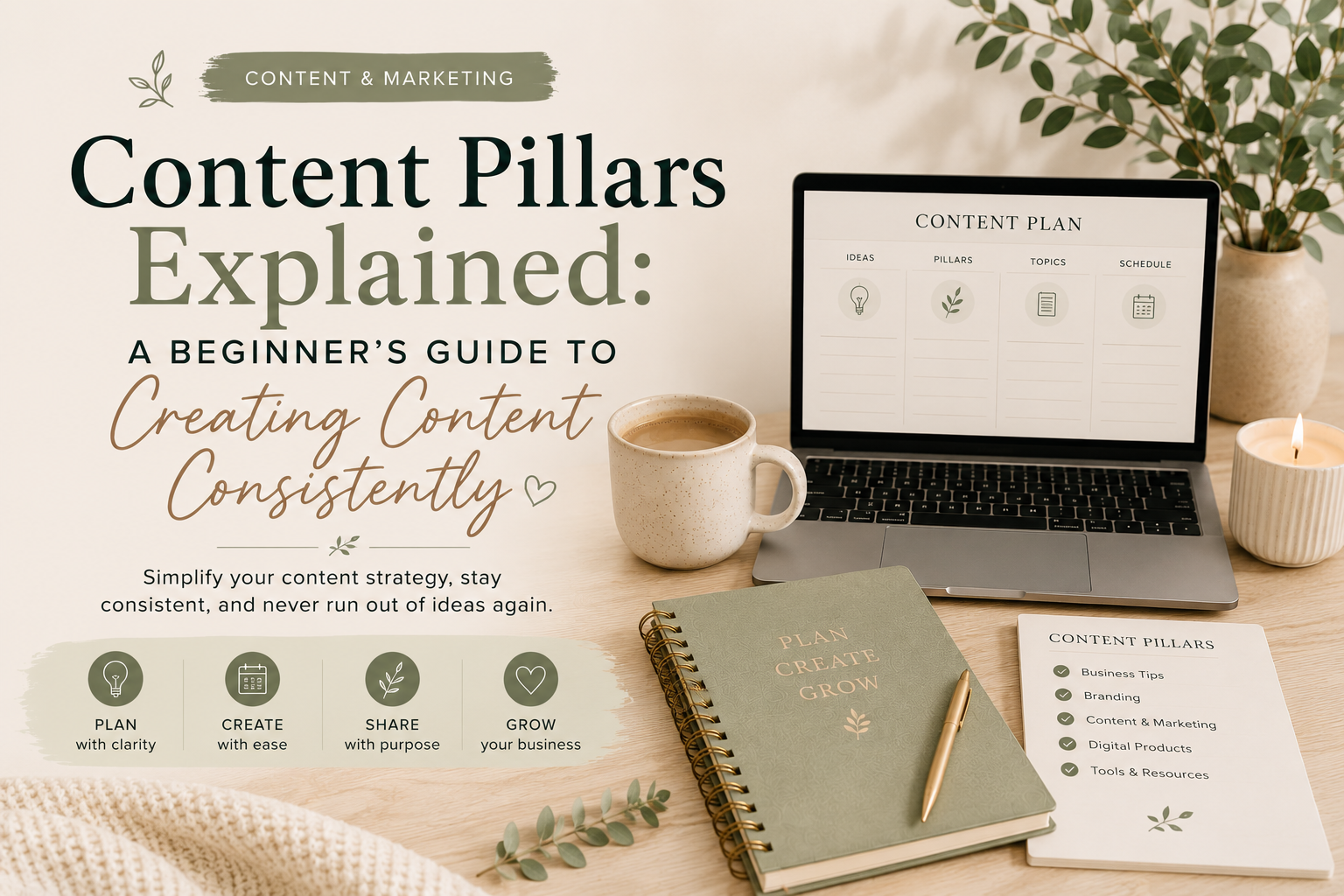
For example, Virtubloom focuses on helping people build online businesses.
Because of that, content pillars could include:
Business Startup
Helping beginners launch their business.
Branding
Creating a memorable and professional brand.
Content & Marketing
Growing visibility and attracting customers.
Digital Products
Creating and selling digital offers.
Business Tools & Resources
Helpful tools that make running a business easier.
Notice how each pillar supports both the audience and future products.
Content Planning Tip
If a topic doesn’t support your audience, your products, your services, or your business goals, it probably doesn’t need to be a content pillar.
How Many Content Pillars Should You Have?
One of the most common mistakes beginners make is creating too many content pillars.
At first, it may seem like more topics mean more opportunities.
However, too many pillars often create confusion.
Instead, aim for:
3 to 5 content pillars
This gives you enough variety while still maintaining consistency.
Most successful businesses don’t talk about everything.
Instead, they repeatedly talk about a handful of topics exceptionally well.
Turn One Idea Into Multiple Pieces of Content
One of the biggest benefits of content pillars is content repurposing.
For example, let’s say you write a blog post about branding.
That single blog post can become:
- Pinterest Pin #1
- Pinterest Pin #2
- Pinterest Pin #3
- Instagram Post
- Instagram Carousel
- Facebook Post
- Newsletter Feature
Suddenly, one idea becomes multiple pieces of content.
As a result, you’re creating more content without constantly starting from scratch.
Helpful Resource
Creating content becomes much easier when you have access to quality fonts, graphics, templates, and design resources.
Common Content Pillar Mistakes
✗ Choosing too many topics
✗ Posting random content
✗ Ignoring audience needs
✗ Constantly changing directions
✗ Creating content without a goal
✗ Following trends that don’t fit your brand
Remember, consistency is often more powerful than complexity.
The goal isn’t to create more content.
The goal is to create better content that supports your business.
Final Thoughts
Content pillars aren’t meant to restrict your creativity.
Instead, they’re designed to give your creativity direction.
When you know the topics your business focuses on, content creation becomes significantly easier.
Rather than staring at a blank screen wondering what to post, you’ll have a clear roadmap to follow.
Furthermore, content pillars help connect your content, products, services, and marketing efforts into a cohesive system.
As your business grows, that consistency becomes one of your greatest strengths.
So if you’re feeling overwhelmed by content creation, start small.
Choose three to five content pillars, create helpful content around those topics, and focus on showing up consistently.
Over time, those small efforts can lead to significant growth.
Let’s Build Something Beautiful Together
Ready to grow your business online? Explore helpful resources, creative business tools, templates, and support designed to help your online business feel more organized, polished, and ready to grow.
Join The VirtuBloom Newsletter
Get free business resources, creative tips, launch support, digital tools, and thoughtful inspiration delivered straight to your inbox.
Leave a Reply