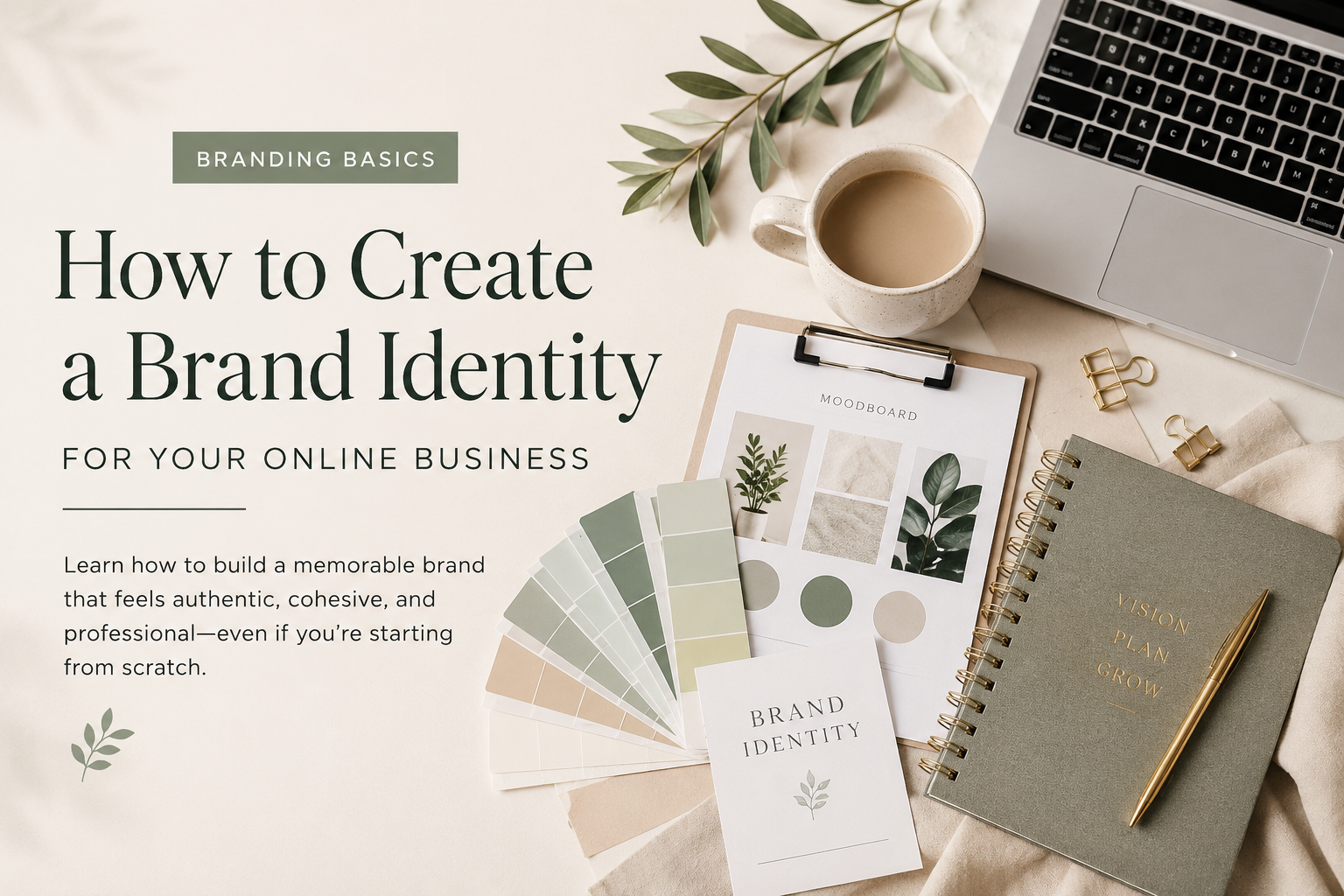
Starting an online business is exciting, but one of the biggest challenges beginners face is creating a brand that feels professional and memorable.
You may have found yourself scrolling through color palettes, testing different fonts, or comparing your brand to others online. The truth is that a strong brand identity isn’t about having the fanciest logo or the trendiest aesthetic.
It’s about creating a clear, consistent experience that helps people recognize, trust, and remember your business.
The good news? You don’t need a design degree or a huge budget to build a beautiful brand.
In this guide, you’ll learn the essential elements of creating a brand identity for your online business, along with practical tips you can start using today.
In This Guide
✓ What a brand identity actually is
✓ How to define your brand personality
✓ Choosing colors and fonts
✓ Creating a cohesive visual style
✓ Common branding mistakes to avoid
✓ Helpful tools for building your brand
What is a Brand Identity?
A brand identity is the collection of visual and emotional elements that represent your business.
It includes things like:
- Your logo
- Brand colors
- Fonts
- Photography style
- Graphics
- Messaging
- Overall personality
Many people assume branding begins and ends with a logo, but a logo is only one piece of the puzzle.
Your brand identity is really about creating a recognizable experience. When someone visits your website, reads a blog post, or sees your content on Pinterest, your branding should help them immediately recognize that it came from you.
A strong brand identity builds trust, credibility, and consistency over time.
“Your brand is not just what people see—it’s how people feel when they interact with your business.”
Step 1: Define Your Brand Personality
Before you choose colors, fonts, or logos, take a step back and think about how you want your brand to feel.
Ask yourself:
- What words describe my business?
- How do I want people to feel when they visit my website?
- What makes my business different?
Choose three to five words that represent your ideal brand personality.
For example, Virtubloom might be described as:
- Calm
- Encouraging
- Organized
- Creative
- Intentional
These words become the foundation for every branding decision you make moving forward.
Need Help Building Your Brand?
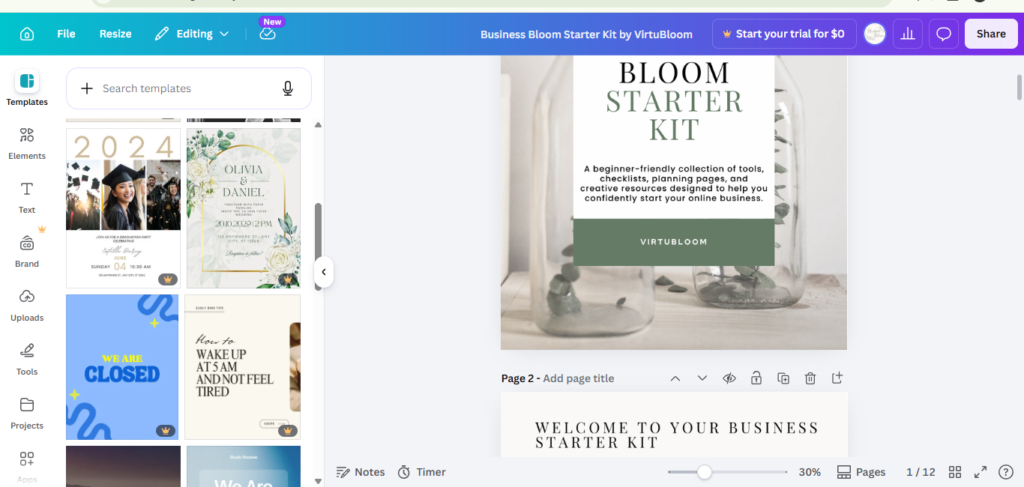
The Business Bloom Starter Kit includes branding worksheets, color palette planning pages, content planning tools, business goals, and beginner-friendly resources to help you build your business with confidence.
Step 2: Choose Your Brand Colors
Color plays a powerful role in how people perceive your business.
Different colors create different emotional responses.
For example:
- Sage green feels calm and grounded.
- Blue often feels trustworthy.
- Beige and cream feel soft and welcoming.
- Black feels elegant and sophisticated.
You don’t need dozens of colors.
Most brands only need:
- One primary color
- One secondary color
- One accent color
- One or two neutrals
Keeping your palette simple makes your brand feel much more professional and easier to maintain.
Color Palette Tip
Save a dedicated Pinterest board for branding inspiration and color palettes. This makes it much easier to identify patterns in the styles you’re naturally drawn to.
Step 3: Select Your Fonts
Fonts communicate personality just as much as colors do.
For example:
Playfair Display feels:
- Elegant
- Editorial
- Timeless
Poppins feels:
- Modern
- Clean
- Friendly
Open Sans feels:
- Professional
- Readable
- Approachable
For most online businesses, two fonts are enough:
- One heading font
- One body font
Simple font pairings almost always look more polished than complicated ones.
Helpful Branding Tool
Canva makes it easy to create moodboards, logos, Pinterest graphics, social media content, and brand kits—even if you have no design experience.
Step 4: Create a Consistent Visual Style
Beyond colors and fonts, your visual style includes:
- Photography
- Graphics
- Layouts
- Icons
- Image editing
The goal is consistency.
If someone visits your website and then finds you on Pinterest, everything should feel connected.
You don’t need perfection.
You simply need recognizable patterns that create a cohesive experience.
Step 5: Bring Your Brand to Your Website
Your website is often the first impression people have of your business.
A strong website should reflect your brand through:
- Consistent colors
- Consistent typography
- Cohesive imagery
- Clear messaging
When your branding feels intentional throughout your website, visitors are much more likely to trust your business.
Ready to Build Your Website?
Once your branding is established, you’ll need a professional place to showcase it. Hostinger makes it easy for beginners to launch a website, connect a domain, and start building their online presence.
Common Branding Mistakes to Avoid
✗ Using too many colors
✗ Choosing too many fonts
✗ Constantly redesigning everything
✗ Copying another brand exactly
✗ Prioritizing aesthetics over clarity
✗ Waiting for everything to feel perfect before launching
Remember that consistency matters far more than perfection.
Many successful brands started with very simple branding and refined it over time.
Remember This
Your brand identity doesn’t need to be perfect before you start.
The strongest brands are built through consistency, experience, and small improvements over time. Focus on creating a brand that feels authentic to you, serves your audience well, and gives you a solid foundation to grow from.
Let’s Build Something Beautiful Together
Ready to grow your business online? Explore helpful resources, creative business tools, templates, and support designed to help your online business feel more organized, polished, and ready to grow.
Join The VirtuBloom Newsletter
Get free business resources, creative tips, launch support, digital tools, and thoughtful inspiration delivered straight to your inbox.
Leave a Reply